DUBAI — Global marketing measurement, attribution, and data analytics leader AppsFlyer has announced a major expansion of its agentic artificial intelligence portfolio, providing enterprise marketing teams with a governed software architecture engineered to execute autonomous AI workflows reliably and transparently while keeping human marketers firmly in control. The platform release extends the AppsFlyer Agent Hub so teams can build custom AI agents, debuts the company’s inaugural agent capable of executing direct bid modifications inside an external advertising platform, and introduces four new Model Context Protocol (MCP) capabilities that allow organizations to query fraud, creative, campaign link, and partner integration datasets directly inside their own internal AI tools.
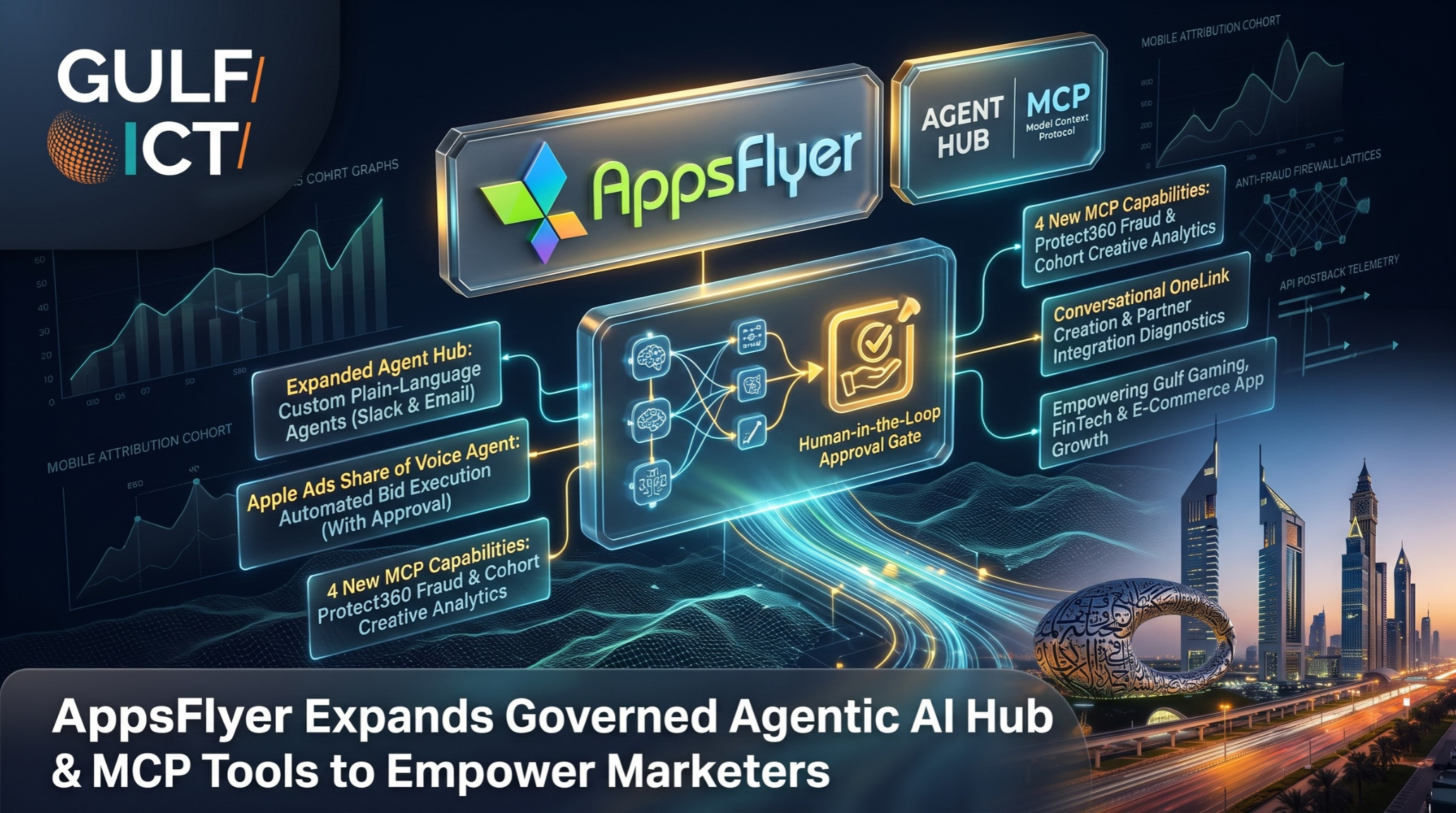
Throughout 2026, the primary operational hurdle for enterprise marketing departments adopting agentic AI has shifted from technical capability toward operational visibility and governance over autonomous actions. AppsFlyer addresses this requirement by embedding transparent reasoning across every automated workflow, enabling growth teams to inspect, evaluate, and validate the analytical logic behind every AI generated recommendation before changes take effect, whether investigating sudden ad fraud anomalies, identifying creative asset fatigue, or adjusting keyword bidding strategies.
Inna Weiner, Vice President of Product at AppsFlyer, stated that marketing organizations are actively transitioning from manual campaign orchestration toward agentic execution, noting that this release equips marketers with trusted agentic tools capable of analyzing, recommending, and acting upon granular attribution data to drive measurable commercial growth.
Through the upgraded Agent Hub, marketers can now construct bespoke AI agents simply by describing any marketing performance workflow in plain language. Once configured, the custom agent extracts relevant performance metrics down to the individual event level, runs automated root cause analysis, recommends next step optimizations, and dispatches scheduled intelligence briefings directly to Slack or enterprise email. Concurrently, the update introduces the Apple Ads Share of Voice Agent, representing the first AppsFlyer agent engineered to move beyond recommendations into direct campaign execution. Currently available in closed beta through AppsFlyer customer success managers, the agent calculates share of voice across individual keywords and geographic markets, proposes bid adjustments whenever performance drifts off target, and applies the updated bids directly within Apple Ads from the AppsFlyer interface strictly upon receiving explicit marketer approval.
Expanding interoperability across external enterprise AI assistants, AppsFlyer’s four new Model Context Protocol tools expose deeper platform telemetry directly to third party MCP clients. Protect360 fraud intelligence is now accessible via MCP, enabling teams to analyze geographic fraud concentration over trailing 30 day windows or pinpoint which custom validation rules triggered the highest volume of blocked installs. Granular creative performance data is now exposed at the individual asset level across spend, reach, conversion, retention, and revenue cohorts to accelerate the detection of winning or fatiguing ads. Extending MCP into campaign operations and technical troubleshooting, OneLink Link Creation converts natural language campaign descriptions into fully configured deep links pending human approval, while Partner Integration Settings surfaces attribution windows, postback rules, and event mappings so marketing and support engineers can diagnose configuration issues conversationally within the AI assistant.
Sarah Maina, Regional Manager for the Middle East and France at AppsFlyer, highlighted that very few global markets have embraced artificial intelligence with the strategic conviction demonstrated across the Gulf region. Maina emphasized that this momentum is particularly pronounced across the Gulf’s rapidly scaling gaming, fintech, and e commerce mobile application sectors, where growth teams are eager to deploy autonomous agents at scale and now gain the governed transparency and human approval guardrails required to align responsible agentic AI execution with the region’s broader digital economy ambitions.