DUBAI — Telecommunications operators in the United Arab Emirates are uniquely positioned to capitalize on structural transformations reshaping the global communications industry, backed by sovereign cloud infrastructure, enterprise artificial intelligence, and advanced wireless networks, according to Boston Consulting Group’s (BCG) 2026 Telco Value Creators Report. Tracking 63 telecommunications companies worldwide across a five year window from 2021 through 2025, the annual benchmark reveals a milestone recovery in global investor returns while identifying the AI first telco as the defining strategic operating model for the sector’s next chapter of value creation.
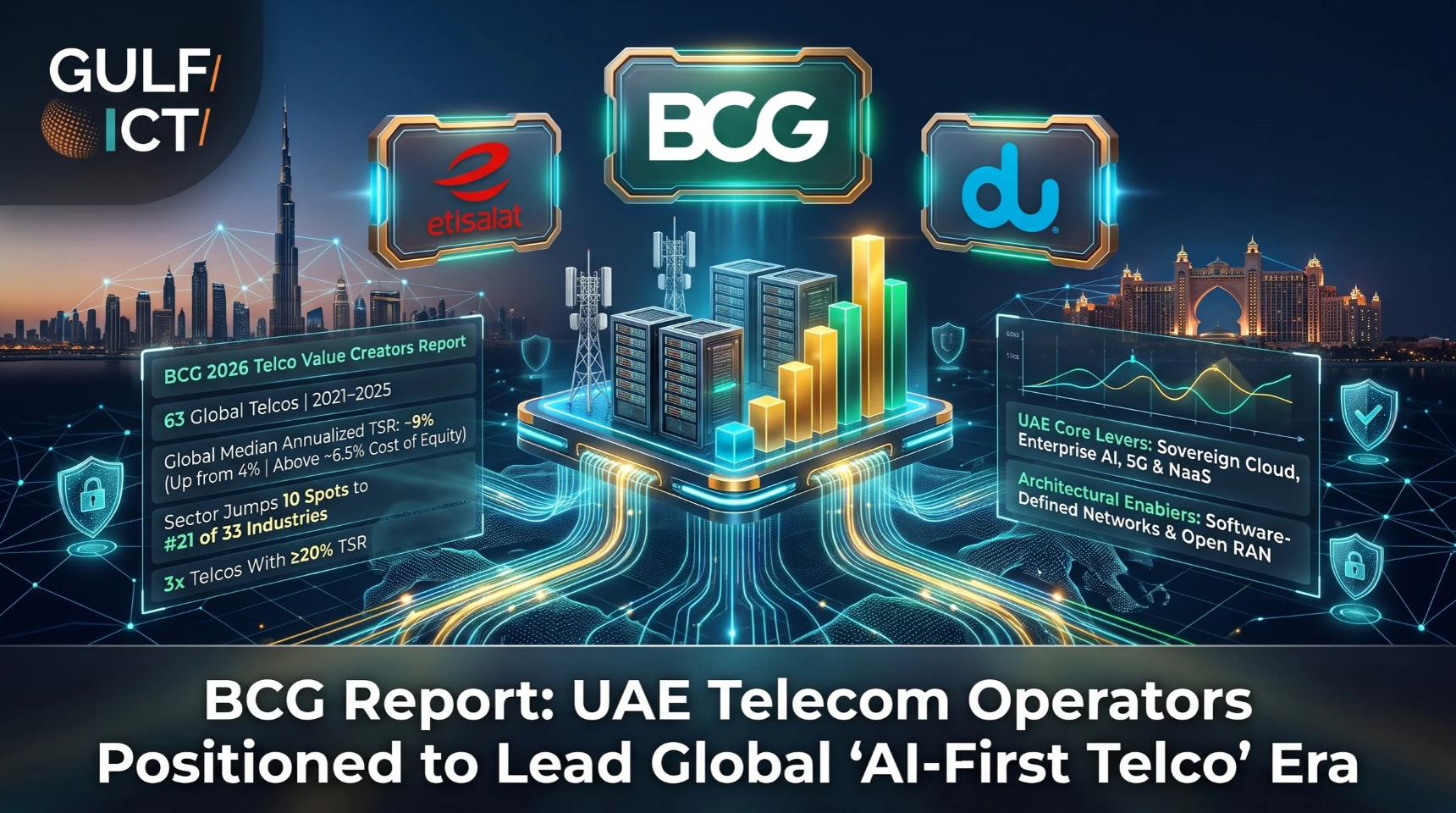
Across the evaluated five year period, global telecommunications operators delivered a median annualized total shareholder return (TSR) of approximately 9 percent, more than doubling the 4 percent recorded during the preceding five year cycle ending in 2024 and comfortably surpassing the industry’s approximate 6.5 percent cost of equity. This financial rebound propelled telecommunications upward by 10 positions in BCG’s cross industry standings to 21st place out of 33 global sectors, while the count of operators achieving annualized TSR of 20 percent or higher tripled year over year from three companies to nine.
While the broader Middle East has emerged as a primary engine of this resurgence thanks to rapid economic digitization, the UAE stands apart by proactively building the exact structural foundations BCG cites as prerequisites for the AI first telco model. Driven by an embedded national digital policy agenda, rising enterprise and public sector demand for strict data residency, and sustained capital deployment by Etisalat and du into sovereign cloud platforms, local data centers, and enterprise AI services, Emirati operators are actively helping define global industry standards rather than merely following them.
Central to BCG’s thesis is the warning that isolated, cost cutting AI tools such as customer service chatbots yield minimal investor re rating upside on their own. Instead, enduring shareholder value requires chief executive led organizational transformation, comprehensive operating model redesign, and commercial AI services that expand overall revenue pools. Nuno Gomes, Managing Director and Senior Partner at BCG, stated that the operators poised to define the next decade of value creation are those engineering comprehensive AI first transformations from the top down rather than running fragmented pilots. Gomes noted that in the UAE, operators are already moving rapidly on sovereign cloud as a core strategic lever, living the blueprint of integrated digital partners while global peers continue debating the model, with the next priority focused on converting infrastructure investments into sustained shareholder returns.
Looking at network architecture and near term monetization, the BCG report highlights sovereign cloud as a premier global growth avenue where domestic telcos hold a distinct regulatory advantage over international hyperscalers under strict data sovereignty mandates. Technically, the study points to agile software defined networks and Open RAN multi vendor radio architectures as vital levers for driving down structural costs and improving capital productivity without compromising service quality. For UAE operators, mature nationwide 5G infrastructure provides the high capacity connectivity backbone required to scale Network as a Service (NaaS) offerings, flexible enterprise bandwidth and compute provisioning, and locally governed AI platforms, creating a compounding competitive advantage across government, corporate, and consumer markets.