ZURICH — World football governing body FIFA confirmed on Thursday that it was targeted by a criminal cyberattack in which threat actors gained unauthorized access to personal and professional records held by the organization, roughly one week after a newly formed cybercrime group threatened to leak stolen files unless its financial extortion demands were satisfied.
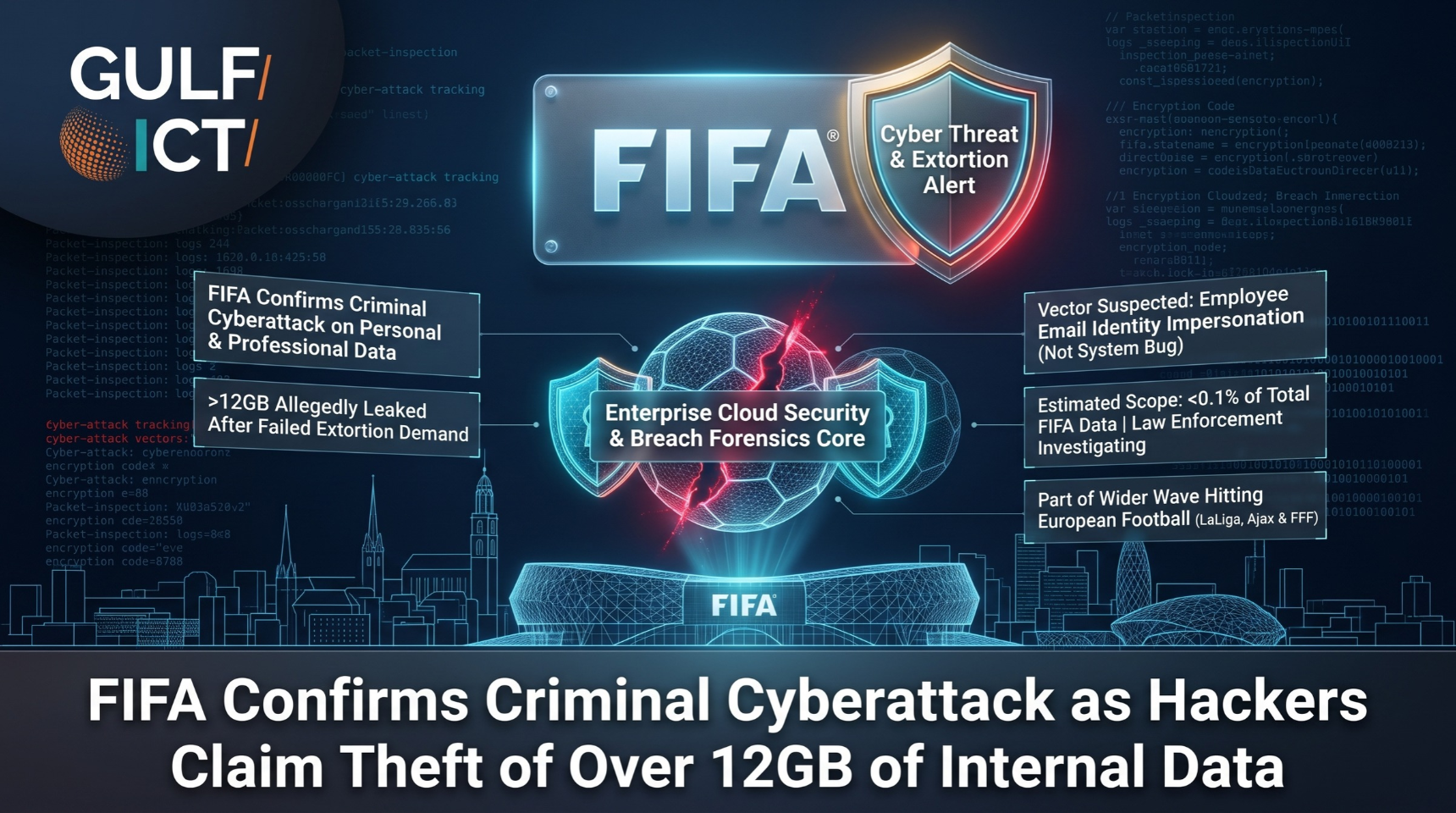
Speaking to the German Press Agency (dpa), a FIFA spokesperson stated that the cyber intrusion allowed hackers unauthorized access to a limited subset of personal and professional information, adding that the organization is working closely with relevant judicial and law enforcement authorities to investigate the full scope of the incident. In a strongly worded statement alongside parallel confirmation issued to the Associated Press, FIFA condemned the illegal acquisition and publication of data, particularly personal records, warning that such actions constitute a grave and unacceptable violation of privacy carrying potentially serious consequences for affected individuals. Headquartered in Zurich, Switzerland with a workforce of roughly 700 employees, FIFA has not yet disclosed the exact timing of the intrusion, the number of impacted individuals, or the precise categories of compromised files.
Last week, a threat group operating under the moniker HandsomeBoy Hacking Club, also tracked as HandsomeBoys Hacking Club, posted a screenshot on X purporting to show internal FIFA directories before appearing three days later to claim responsibility in response to a post reporting the leak of more than 12 gigabytes of internal documents. According to cybersecurity outlet The Record, the newly emerged extortion collective claimed to have stolen over 12GB of FIFA files and attempted to extort the governing body financially before publishing the alleged cache on an underground hacking forum after ransom negotiations failed. The group claimed it infiltrated FIFA’s Microsoft environment and exfiltrated identity and immigration documents, financial records, legal files, and corporate governance materials, while Spanish cybersecurity portal Escudo Digital noted that the gang had listed FIFA on its dark web leak site alongside an undisclosed ransom deadline prior to FIFA confirming the breach via email.
Sources familiar with the investigation speaking on condition of anonymity indicated that the attackers appear to have accessed the records by impersonating FIFA employees, potentially via email social engineering, suggesting the breach stemmed from identity impersonation rather than an underlying software vulnerability inside FIFA’s core IT infrastructure. One informed source estimated that the intruders accessed less than 0.1 percent of total data held by FIFA, noting that sensitive materials tied to the controversial FIFA Football Enterprises World Cup commercial venture appear not to have been compromised. Similarly, Swiss outlet SWI swissinfo.ch, citing dpa, reported that the cyberattack bears no connection to FIFA President Gianni Infantino’s abandoned private equity plan to sell stakes in World Cup commercial rights, which had placed the governing body under heightened scrutiny following last summer’s World Cup.
While cybercrime groups circulated several fabricated breach claims targeting FIFA ahead of the tournament, Thursday’s statement marks a rare official confirmation of an actual intrusion, even though FIFA stopped short of formally attributing the attack to HandsomeBoys Hacking Club. Having surfaced only last week with little public intelligence regarding its operators or affiliations, the group has rapidly drawn analyst scrutiny as an emerging ransomware and extortion threat after simultaneously claiming breaches against telecommunications provider Frontier Communications, US healthcare system UCHealth, and firearms manufacturer Smith & Wesson. The Zurich breach also extends a widening wave of cyberattacks hitting European football institutions, arriving days after Spain’s LaLiga disclosed on Monday that hackers stole personal fan data in an attack impacting its digital platforms and several Spanish clubs, following a May arrest by Dutch police of a 35 year old suspect linked to hacking Ajax Amsterdam and a 2025 cyberattack disclosed by the French Football Federation (FFF).