NEW DELHI — India’s Department of Telecommunications (DoT) has convened multiple rounds of high level security consultations with the country’s four primary telecommunications operators, comprising Reliance Jio, Bharti Airtel, Vodafone Idea (Vi), and state owned Bharat Sanchar Nigam Limited (BSNL), to reinforce core network defenses and safeguard critical national communications infrastructure against emerging cyber threats.
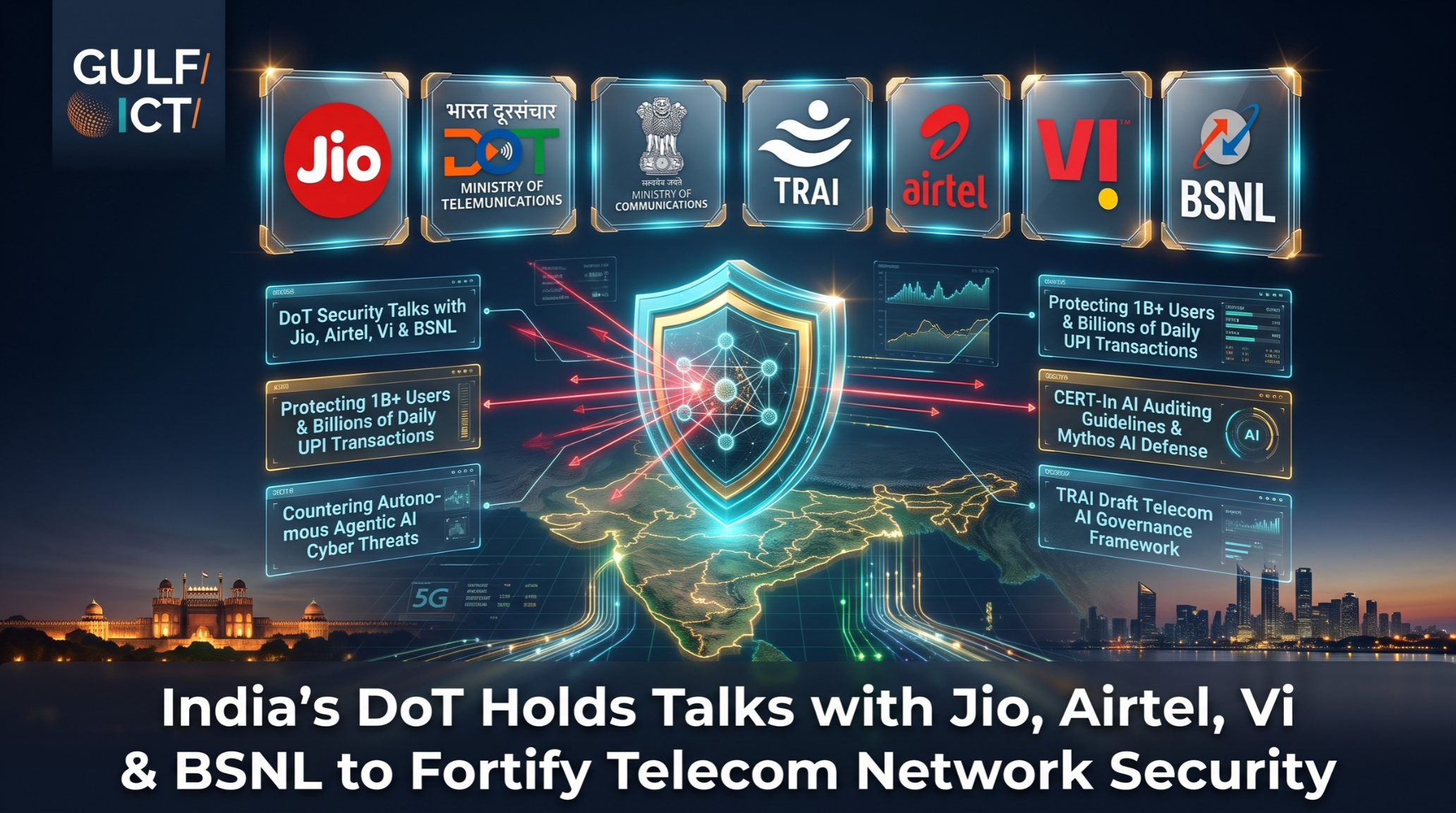
According to senior government officials, the ministry has conducted three to four dedicated security review sessions with carrier executives as operators actively deploy advanced network firewalls and automated safeguards across their infrastructure. Officials confirmed that existing telecommunications systems remain highly resilient and that no security breaches or untoward incidents have been detected across any domestic carrier network to date.
The regulatory engagement arrives amid heightened global and domestic vigilance surrounding the weaponization of artificial intelligence, particularly autonomous AI agents, by threat actors seeking to identify and exploit software vulnerabilities at machine speed. The Indian Computer Emergency Response Team (CERT In) recently published multiple threat advisories warning against rogue autonomous AI agents and open source agentic software tools being utilized to conduct automated network reconnaissance and cyberattacks. Because India’s telecommunications networks form one of the world’s highest volume digital backbones, carrying voice and data traffic for more than one billion subscribers alongside thousands of large enterprises and billions of daily financial transactions over the Unified Payments Interface (UPI) and core banking rails, insulating carrier infrastructure remains a top national security priority.
To bolster domestic threat detection and vulnerability management, CERT In issued comprehensive Artificial Intelligence Security Auditing Guidelines on November 4, establishing a standardized governance and security assessment framework for AI systems deployed across government ministries and private enterprises. Concurrently, the national cybersecurity agency secured institutional access to Anthropic’s Mythos AI model, an advanced frontier capability restricted to a select group of trusted global organizations designed to identify complex software vulnerabilities and accelerate real time incident response. In parallel, the Telecom Regulatory Authority of India (TRAI) has published a draft AI governance framework tailored specifically for telecommunications networks, introducing mandatory risk classification protocols and incident reporting requirements for severe AI related network anomalies, with industry stakeholder feedback open until November 27, 2026.
India’s proactive regulatory measures mirror a broader international campaign by governments and telecommunications carriers to harden critical communications infrastructure and deploy defensive artificial intelligence following major state linked cyberespionage incidents worldwide. Last year, Singapore disclosed that all four of its major domestic telecom operators had been targeted by a state linked threat group attempting to maintain persistent network access and exfiltrate technical data, prompting Singaporean authorities in March 2026 to equip critical infrastructure operators with government engineered threat detection platforms and classified intelligence sharing feeds. Similarly, telecommunications regulators globally have tightened network audit mandates following the Salt Typhoon cyberespionage campaign uncovered in late 2024 in the United States, which targeted major carriers including AT&T, Verizon, and T Mobile to access communications metadata and call records.