RIYADH — The Saudi Council of Ministers, chaired by His Royal Highness Prince Mohammed bin Salman bin Abdulaziz Al Saud, Crown Prince and Prime Minister, has officially approved the National Space Policy, establishing a comprehensive strategic and regulatory framework to advance the Kingdom’s sovereign aerospace ecosystem, satellite communications infrastructure, and commercial space economy.
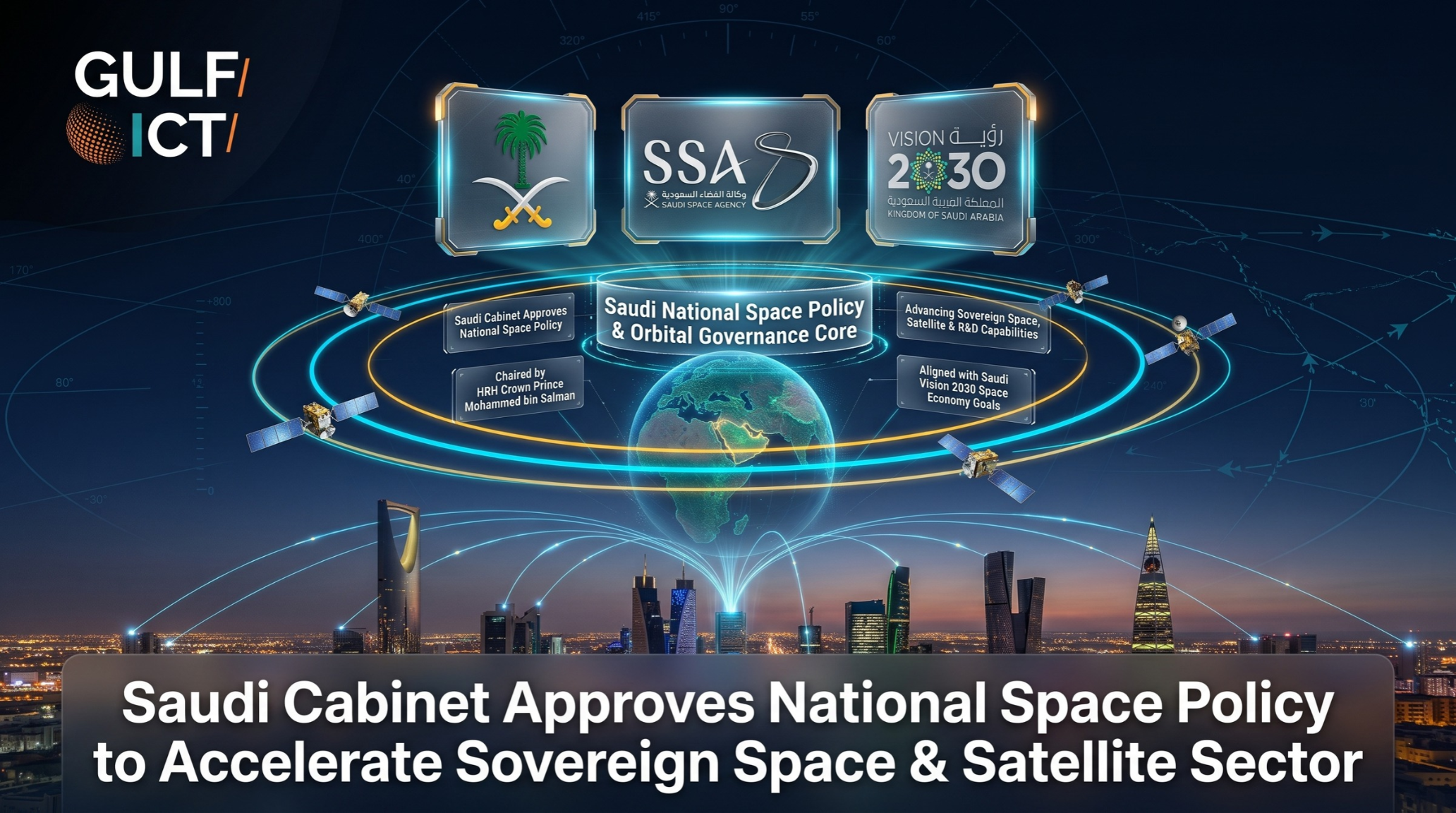
Adopted during the Cabinet session held in Riyadh, the approval of the National Space Policy provides the overarching governance mandate to align domestic space research, orbital asset development, and private sector aerospace investment with the long term economic diversification objectives of Saudi Vision 2030. Alongside the space sector milestone, the Council of Ministers approved financial oversight rules governing endowment accounts managed or supervised by government entities, and authorized the transfer of several mandates and competencies from the General Authority for Exhibitions and Conventions to the National Events Center and the Saudi Investment Marketing Authority.
On the bilateral cooperation front, the Cabinet endorsed a memorandum of understanding with the Government of India covering water resources management and authorized official discussions with Syrian counterparts regarding a joint cooperation project focused on labor market modernization and workforce skills development.
Reviewing broader international affairs and multilateral economic stability, the Council of Ministers assessed the outcomes of Saudi Arabia’s active participation across Gulf Cooperation Council (GCC) and Group of Twenty (G20) ministerial meetings. The Cabinet emphasized the Kingdom’s commitment to strengthening multilateral frameworks that address pressing global challenges across maritime navigation security, energy stability, food security, international trade, and global supply chain resilience.
The Council of Ministers reiterated Saudi Arabia’s firm rejection of all violations threatening the safety of international maritime navigation and global energy supplies, calling for urgent international action and adherence to international law to safeguard maritime corridors and global commerce. The Cabinet affirmed that despite ongoing regional challenges, the Kingdom has consistently maintained reliable energy supplies to international markets, underpinned by sustained long term capital investments in infrastructure, storage facilities, and resilient supply chain networks engineered to operate at peak technical and operational readiness.