UNESCO and ITU Issue Joint UNGA Declaration Warning Unequal AI Access Risks Deepening Global Divides
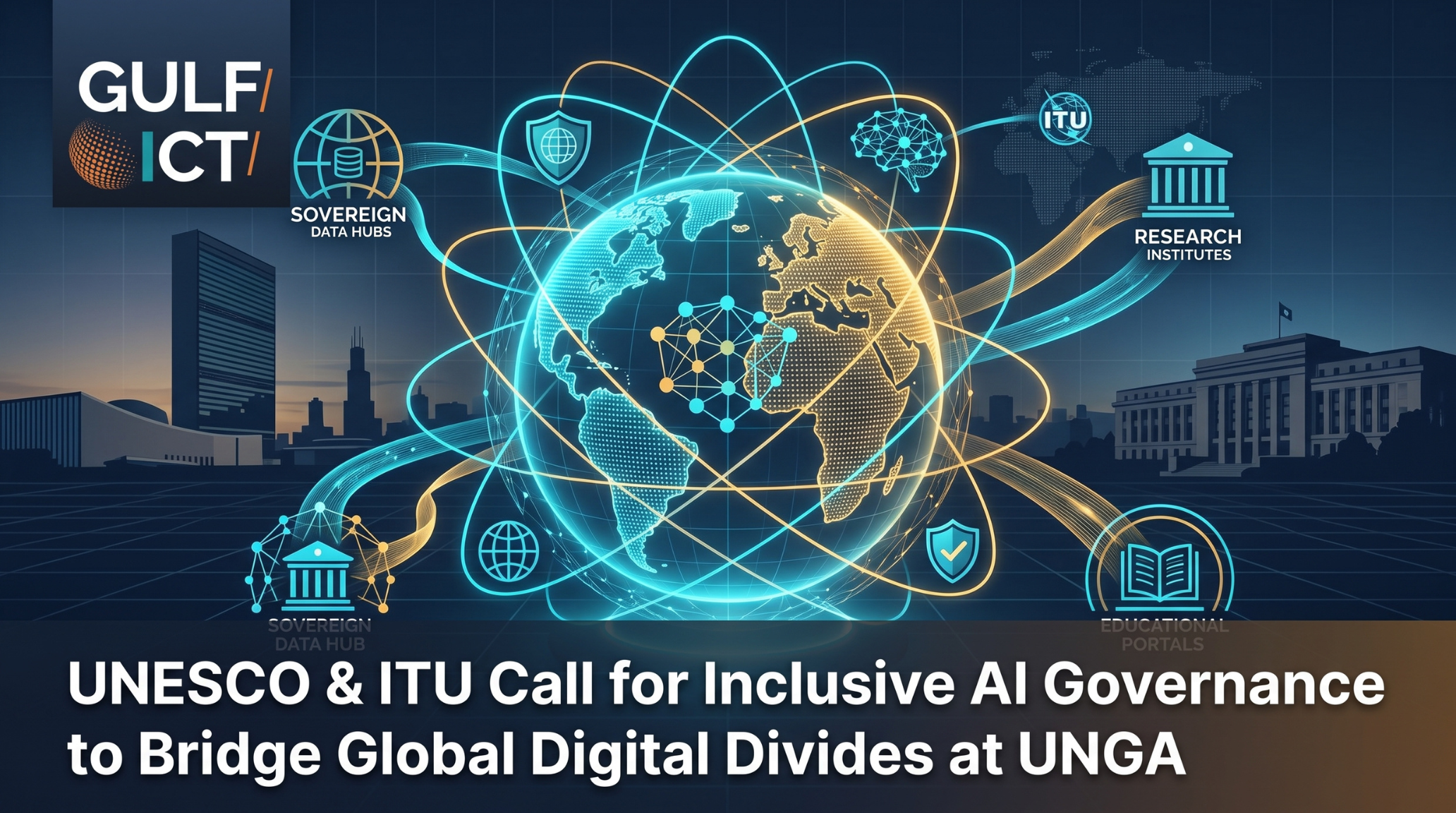
NEW YORK / GENEVA — The benefits of artificial intelligence will not be distributed evenly by default, and unequal access to digital connectivity, computational power, and institutional safeguards risks entrenching severe global inequalities, warned Khaled El Enany, Director General of UNESCO, and Doreen Bogdan-Martin, Secretary General of the International Telecommunication Union (ITU), in a joint policy declaration presented during United Nations General Assembly week.
In their joint statement titled "Who Gets to Shape AI’s Future?", the leaders of the two United Nations specialized agencies stressed that the central global challenge surrounding frontier technologies has shifted from how powerful algorithms will become to how they can be developed, evaluated, and governed in ways that societies can genuinely trust. Without coordinated international intervention, a small group of entities will design the algorithmic systems that govern daily life, while excluded nations and communities will simply be forced to absorb the consequences of those design decisions.
The joint statement outlines a coordinated operational framework uniting UNESCO’s normative foundations, established through the global UNESCO Recommendation on the Ethics of Artificial Intelligence, with the ITU’s technical standardization mandate and multistakeholder platforms including AI for Good. This complementary architecture is designed to translate abstract human rights principles into enforceable, cross border technical standards that public institutions can inspect, procure, and audit.
El Enany and Bogdan-Martin cautioned that while capital investment and computing power accelerate exponentially, international bodies and sovereign governments must invest in human intelligence, digital literacy, and critical thinking with equivalent urgency. They stressed that digital inclusion extends far beyond consultative exercises to ensuring developing economies, researchers, youth, and underrepresented communities possess the physical infrastructure, sovereign datasets, and institutional tools necessary to adapt artificial intelligence to their own cultural priorities and native languages.
Both agencies confirmed ongoing commitments to institutional mechanisms including the Global Dialogue on AI Governance and the Independent International Scientific Panel on AI, mobilizing academic networks, UNESCO Chairs, and global telecommunications standards bodies to ensure frontier technological progress expands human capability rather than concentrating digital authority.