Samsung Asserts Physical AI Will Shift Telecom Networks from Pure Connectivity to Distributed Compute Hubs Ahead of 6G
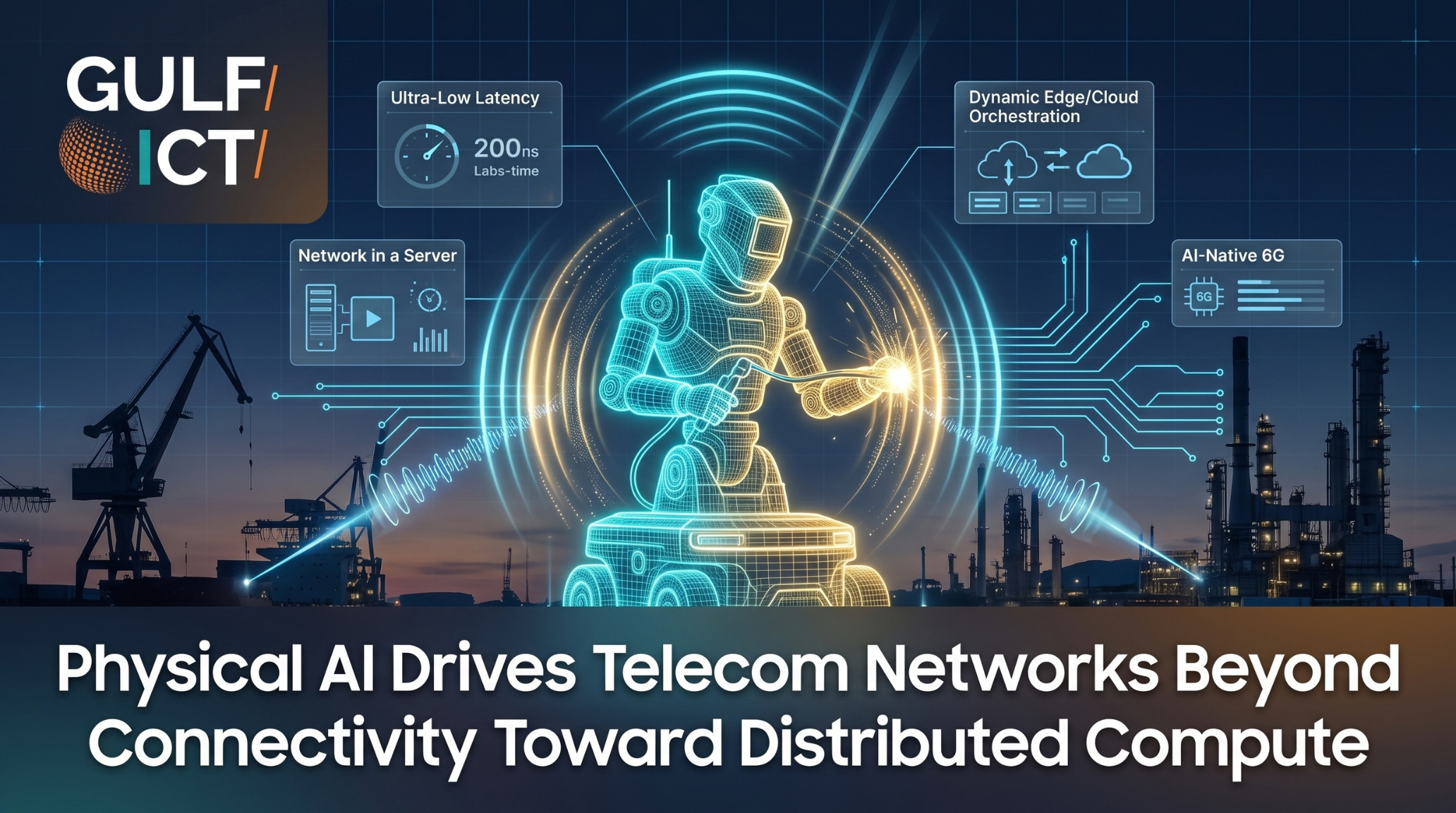
SEOUL — Global technology and telecommunications equipment provider Samsung Electronics has declared that the operational emergence of physical artificial intelligence will fundamentally reshape telecommunications architecture, forcing commercial networks to evolve beyond traditional data transmission pipelines into intelligent, distributed computing infrastructure.
Speaking to industry media, Jungchul Kim, Head of Product Strategy Group for the Networks Business at Samsung Electronics, outlined that physical artificial intelligence systems such as autonomous robotic units, machine vision clusters, and industrial drones impose rigorous deterministic performance demands. Kim stated that these systems require ultra low latency, carrier grade reliability, sustained high throughput, expanded uplink capacity, and fully autonomous network self optimization.
Rather than treating connectivity and computing as isolated layers, Kim emphasized that next generation networks must dynamically orchestrate compute workloads across devices, on premise edge nodes, and centralized cloud facilities depending on real time radio constraints and processing overheads.
Samsung is actively putting this operational philosophy into practice across field deployments launching under the South Korean Ministry of Science and ICT Hyper AI Network initiative. The state backed program deploys 5G Standalone (SA) private networks across heavy industrial environments to test physical artificial intelligence services in live operating conditions.
At the Yeongam Shipyard of HD Hyundai Samho, carrier KT is field testing autonomous welding, painting, and facility management robots. Concurrently at SK Incheon Petrochem, SK Telecom is validating autonomous patrol robots transmitting live high definition video streams for real time automated hazard detection.
To sustain both deployments, Samsung is delivering its proprietary Network in a Server (NIS) architecture, which integrates virtualized Radio Access Network (vRAN) software, 5G SA core functions, and containerized artificial intelligence applications onto commercial off the shelf server hardware.
Samsung affirmed that operational telemetry and network performance data extracted from the Korean shipyard and petrochemical pilots will directly feed into its long term research and development roadmap, establishing foundational network standards for commercial AI native 6G architectures.