Microsoft, UAE Cyber Security Council, and Core42 Partner to Deploy MDASH AI Code Defense Across Federal and Local Government Entities
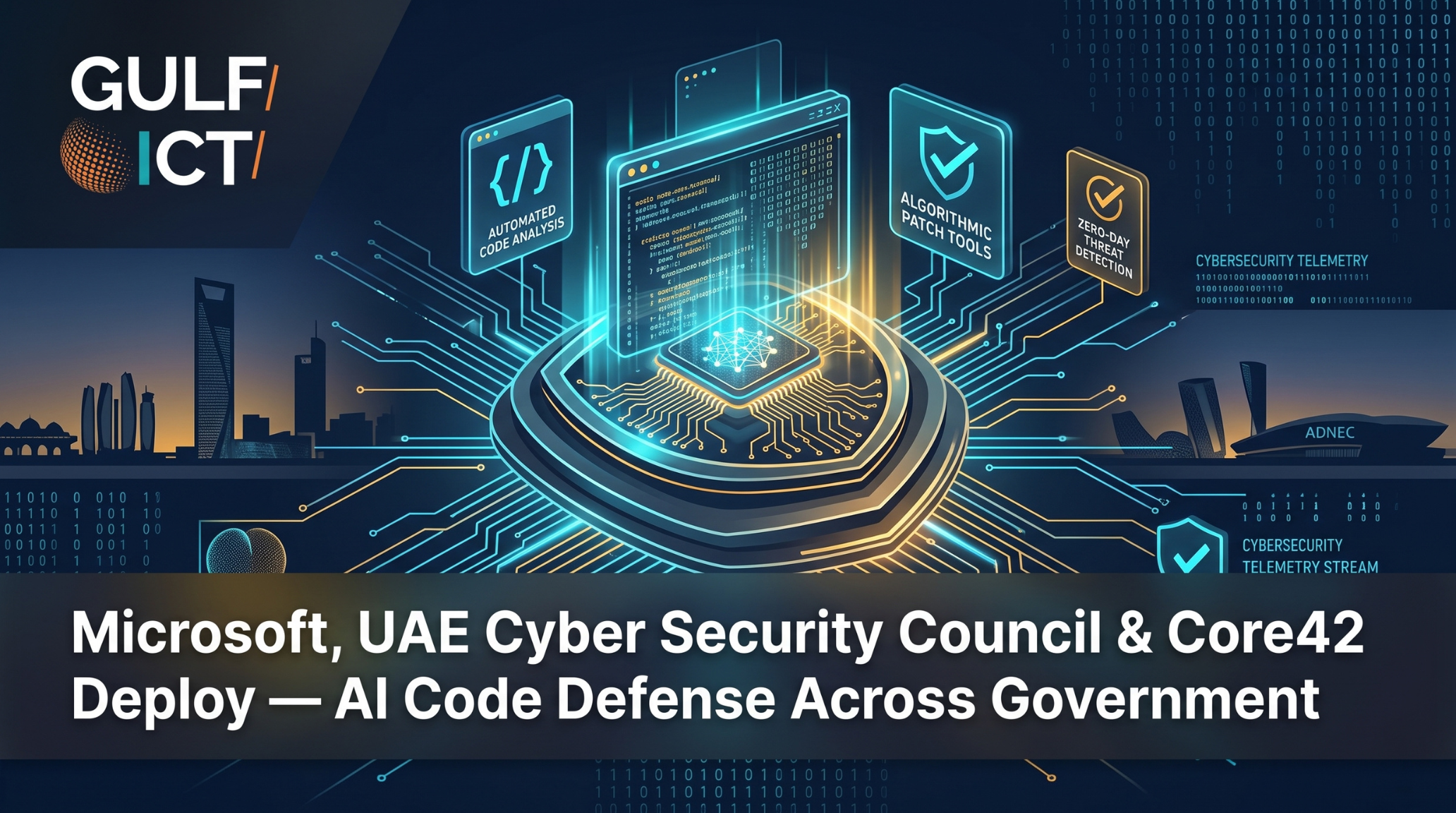
ABU DHABI — The UAE Cyber Security Council (CSC), technology enterprise Microsoft, and sovereign digital enabler Core42, a G42 company, have entered into a strategic collaboration to deploy MDASH, Microsoft’s agentic artificial intelligence powered code security platform, across United Arab Emirates government entities.
The coordinated initiative is engineered to safeguard public sector digital infrastructure, accelerate trusted digital governance, and equip internal ministerial engineering teams with automated cognitive tooling to detect, validate, and remediate software vulnerabilities prior to adversary weaponization.
Operating as an advanced multi-model agentic scanning system within the Microsoft security portfolio, MDASH deploys specialized algorithmic sub-agents that collaboratively analyze codebases, execute semantic taint validation, and conduct iterative agentic debate to eliminate false positives and generate remediated code fixes. By examining complex interdependencies across enterprise software supply chains, the platform identifies elusive structural flaws that traditional pattern matching static analysis tools fail to intercept.
Under the framework, the UAE Cyber Security Council will oversee government adoption, regulatory compliance, and responsible artificial intelligence integration, validating deployments through the National AI Test and Validation Lab. Core42 will lead direct implementation, onboarding, and systems integration, hosting the capability within its Sovereign Public Cloud environment to ensure that all data pipelines, diagnostic logs, and scanning activities adhere strictly to national data residency, privacy, and operational governance protocols.
His Excellency Dr. Mohamed Al Kuwaiti, Head of Cyber Security for the UAE Government, affirmed that securing core application logic forms the cornerstone of national resilience as cognitive models integrate into civic services. Al Kuwaiti underscored that code security must be embedded into public infrastructure from inception rather than managed retrospectively, noting that the deployment of MDASH marks a structural leap toward sovereign code immunity.
Hayete Gallot, Executive Vice President of Security and Emerging Technologies at Microsoft, stated that sovereign administrations globally are leveraging artificial intelligence as a strategic force multiplier to protect citizen data and mission critical operations. Gallot emphasized that the trilateral alliance delivers scalable resilience to preempt emerging adversary techniques.
Talal M. Al Kaissi, Chief Executive Officer of Core42, highlighted that the country’s proactive leadership in artificial intelligence adoption necessitates building hardened, reliable digital foundations. Al Kaissi noted that uniting Microsoft’s frontier security research with Core42’s sovereign cloud architecture provides government institutions with cutting edge defenses while preserving complete domestic control over critical operational assets. The rollout will proceed across structured phases, incorporating specialized capacity building workshops, pilot technical integrations, and institutional onboarding for participating agencies.