Oman Mobile Subscriptions Climb to 8.51 Million as NCSI Data Shows M2M and Satellite Broadband Surges
MUSCAT — Total mobile telecommunications subscriptions across the Sultanate of Oman reached 8.51 million by the end of August 2026, marking a 2.5 percent increase compared to the corresponding period in 2025, according to official telecom sector indicators published by the National Centre for Statistics and Information (NCSI).
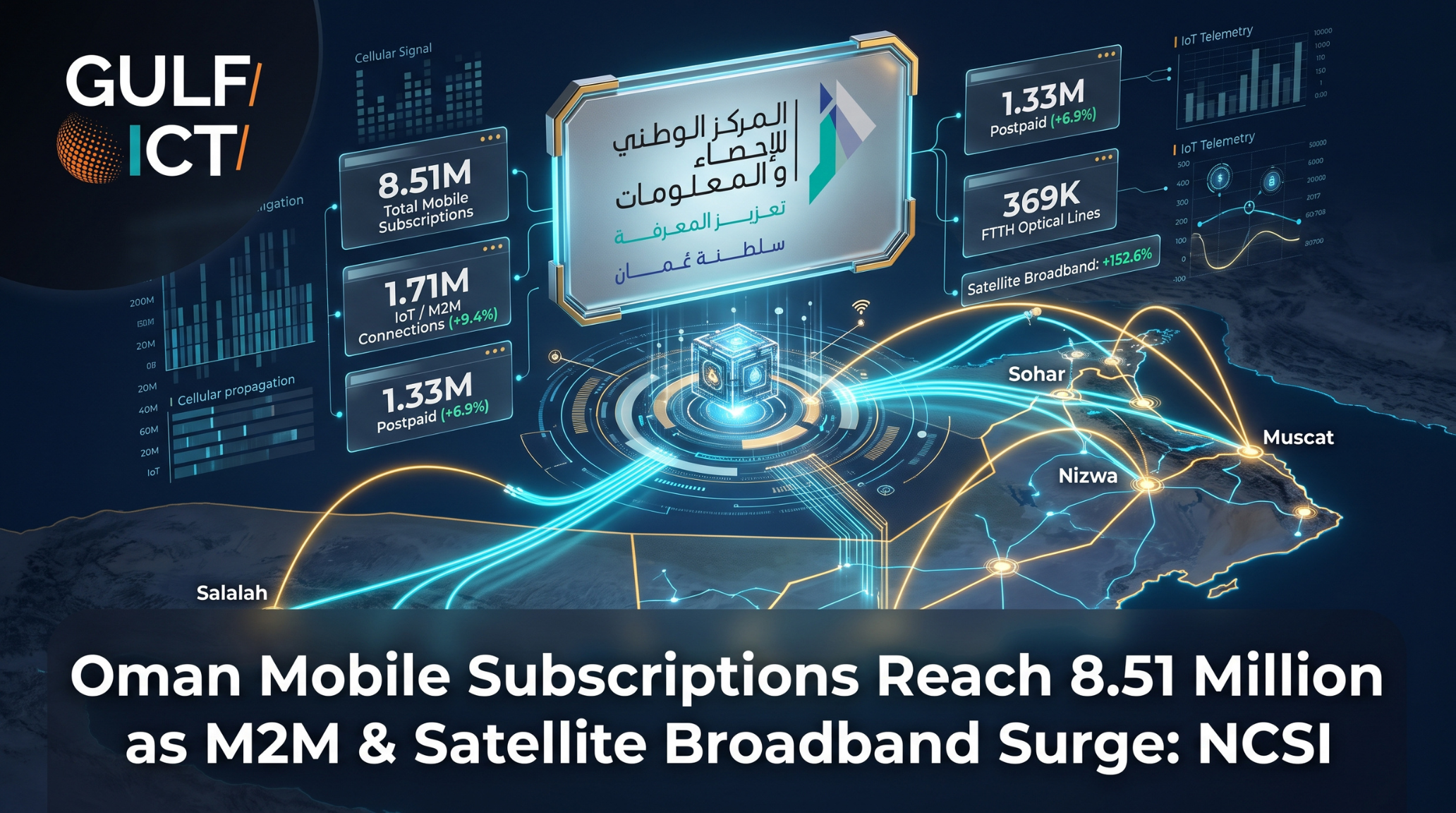
The demographic breakdown reveals a sustained structural migration toward premium contracted tiers alongside rapid adoption of enterprise automation. Active postpaid mobile phone accounts expanded by 6.9 percent to reach 1.33 million subscriptions, while prepaid services recorded a marginal contraction of 0.4 percent to stand at 5.46 million subscriptions. Underscoring rapid industrial digitalization, Internet of Things machine to machine (M2M) connectivity continued its steep upward trajectory, climbing 9.4 percent to reach 1.71 million active subscriptions by late August.
In the broader internet domain, active mobile broadband subscriptions expanded to 5.68 million accounts, while fixed broadband internet subscriptions reached an aggregate of 595,604 active connections.
Analysis of fixed transmission technologies illustrates a definitive transition toward high speed next generation access infrastructure alongside specialized satellite deployments. High speed fiber to the home and business (FTTH/B) connections increased by 6.5 percent to reach 369,766 lines, solidifying its position as the primary fixed medium, while fixed wireless access via fifth generation (5G) networks accounted for 209,519 subscriptions.
Notably, satellite based fixed broadband documented the sharpest relative growth curve among all access media, escalating by 152.6 percent to reach 2,084 active connections, highlighting expanding coverage reach across remote and offshore territories. Conversely, legacy copper and fourth generation access technologies continued their rapid phaseout, with fixed 4G connections plunging by 67.9 percent to 5,107 subscriptions, legacy ADSL lines contracting 23.1 percent to 8,411 subscriptions, and alternative leased or power line infrastructure decreasing by 4.5 percent to 717 connections.