MUSCAT — Telecommunications and digital infrastructure provider Omantel has officially inaugurated a centralized,structured Research and Development (R&D) initiative, establishing its first dedicated corporate R&D unit designed to place scientific experimentation and proprietary technological engineering at the foundation of its commercial business model.
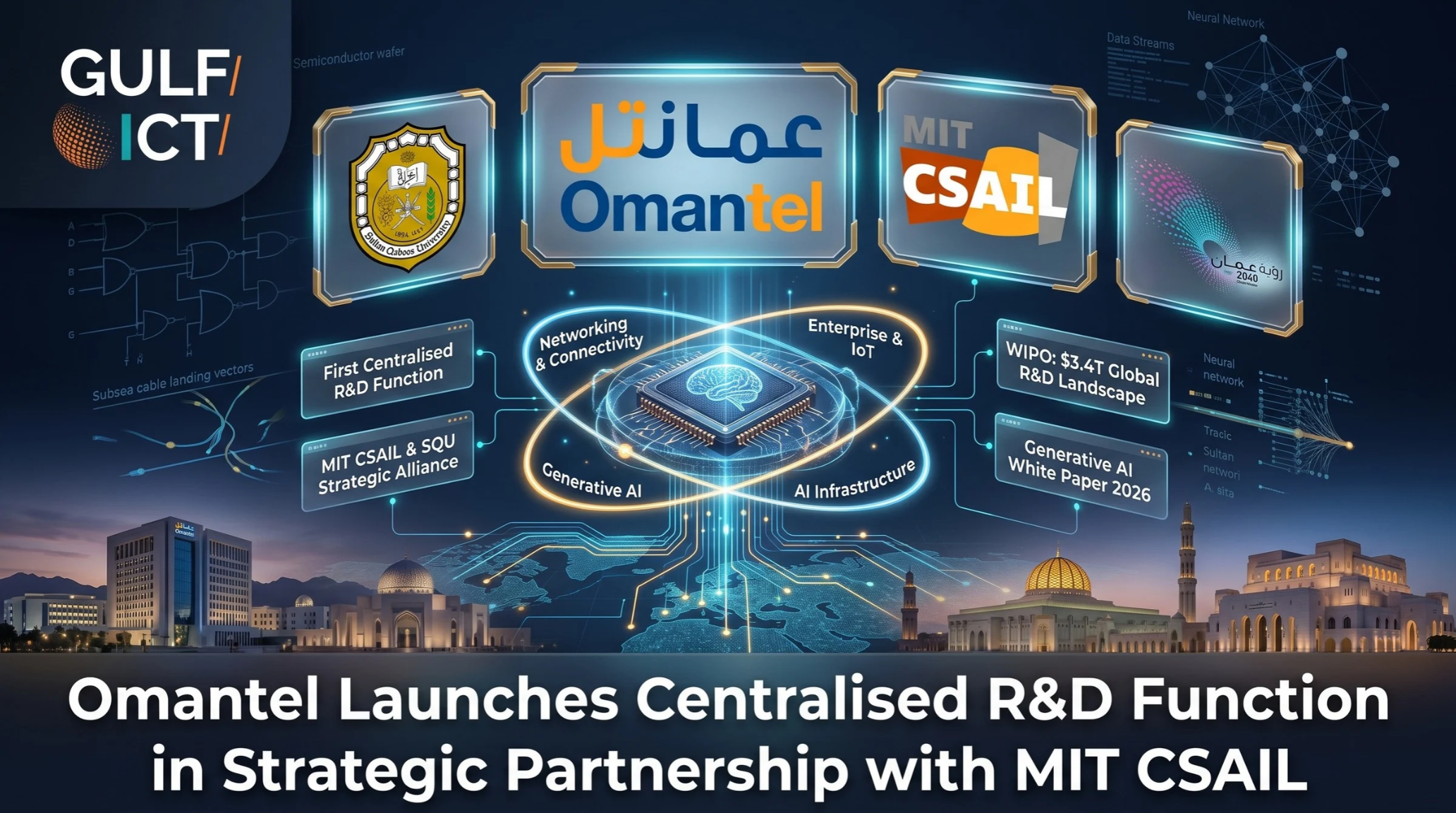
The strategic program creates an institutional conduit to transition early stage prototypes into market ready digital products while strengthening the operator’s capacity to anticipate frontier technology cycles across generative artificial intelligence, advanced computing topologies, next generation connectivity, and national cybersecurity defense. By institutionalizing an internal research wing, Omantel seeks to localize technical capabilities, stimulate commercial experimentation, and directly underpin the knowledge economy objectives articulated within Oman Vision 2040.
The operational research agenda centers on four strategic technical pillars, comprising networking and telecom connectivity, enterprise architectures alongside the Internet of Things (IoT), applied generative artificial intelligence models, and physical AI compute infrastructure. These focus areas are intended to guide lab exploration, patent development, and future enterprise service lines as digital transformation demand accelerates across the Sultanate.
To establish the initiative on an international footing, Omantel has executed formal research partnerships with the MIT Computer Science and Artificial Intelligence Laboratory (MIT CSAIL) alongside three premier domestic academic institutions, including Sultan Qaboos University (SQU), the Oman College of Health Sciences (OCHS), and the Modern College of Business and Science (MCBS). The collaborative framework aims to bridge the gap between theoretical academic inquiry and commercial telecommunications requirements, facilitating cross border knowledge transfer, joint computational projects, and specialized talent development.
The strategic activation coincides with escalating global capital flows into scientific engineering, with data from the World Intellectual Property Organization (WIPO) projecting international research and development outlays to expand 3.6 percent throughout 2026 to touch approximately $3.4 trillion.
Eng. Aladdin Baitfadhil, Chief Executive Officer of Omantel, affirmed that national talent possesses the ambition and technical aptitude to drive the creation of tomorrow’s technologies, emphasizing that the initiative directly connects young innovators with applied research, enterprise domain expertise, and advanced computational infrastructure. Baitfadhil noted that the program expands upon the foundational incubation work of Omantel Innovation Labs, forging stronger bonds across local academia and industry to ensure technology is not merely imported and consumed, but actively conceptualized, engineered, and exported from Oman to the wider region.
Leveraging its extensive subsea cable connectivity and regional data center footprints, Omantel confirmed it will publish an exhaustive R&D white paper on generative AI infrastructure before the conclusion of 2026, examining how the Sultanate’s geographic transit corridors and domestic cloud platforms can serve as a sovereign computational foundation for Middle Eastern digital economies.